
The Media's Assault on Men
They hate men
5/8/20262 min read
The Media's Assault on Men
Stereotypes, Narratives, and Cultural Consequences
May 2026
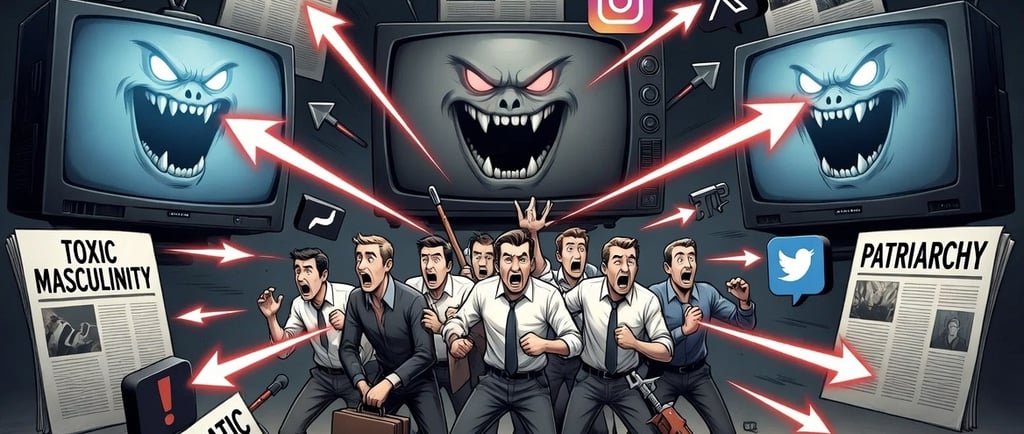
In today’s media landscape, men are frequently portrayed as the problem. From advertisements and television shows to Hollywood films, news coverage, and opinion pieces, men are often depicted as aggressive, emotionally stunted, incompetent at home, or inherently dangerous. This is not random or occasional — it is a consistent and pervasive pattern.
Common Tropes and Stereotypes
Television and film regularly cast male characters as aggressors. Studies on children’s programming show male characters committing the majority of violent acts while appearing less empathetic and more emotionally restrained than female characters. Fathers are commonly portrayed as bumbling, clueless, or emotionally absent.
Advertising reinforces these stereotypes. Men are frequently shown as helpless in domestic settings — the classic “incompetent dad” who needs his smarter wife or a product to rescue him. While men still dominate overall screen time, the quality of their portrayal in family and home contexts is overwhelmingly negative.
News and opinion media heavily promote the concept of “toxic masculinity” as an explanation for many societal problems. Crime reporting correctly highlights male perpetrators of violent crime but gives far less attention to male victims — particularly in cases of suicide, workplace fatalities, homelessness, and false accusations.
Recurring negative themes include:
• Men as violent or sexually predatory
• Deadbeat or untrustworthy fathers
• Emotionally unavailable or commitment-phobic partners
• Hyper-masculine villains or pathetic, incompetent losers
Many viewers report feeling that modern media presents men as either threatening or ridiculous.
The “Toxic Masculinity” Framework
The term “toxic masculinity” was originally meant to describe specific harmful behaviors. However, it has increasingly been used as a broad indictment of normal male traits such as strength, competitiveness, stoicism, and protectiveness. This framing risks pathologizing masculinity itself rather than addressing individual actions. Female aggression and harmful behaviors often receive far less media scrutiny.
Boys and young men receive conflicting messages: society expects them to be strong and courageous in dangerous situations (military service, emergency response, protection of others), yet simultaneously encourages them to apologize for those same masculine traits in everyday life.
Real-World Impacts
Media portrayals shape self-perception and societal attitudes. When boys grow up seeing their natural inclinations — rough play, risk-taking, and emotional restraint — consistently portrayed as problematic, it affects their confidence and development.
This cultural narrative coincides with measurable disparities:
• Men account for approximately 75–80% of all suicides
• Boys are falling behind girls in education at nearly every level
• Men make up the vast majority of workplace deaths and the homeless population
Relentless negative framing can erode self-worth, discourage men from seeking help, and contribute to growing alienation among boys and men.
Toward a Balanced Approach
Fair criticism of harmful behavior is valid and necessary. Issues such as domestic violence and emotional suppression deserve honest discussion. However, selective outrage and one-sided narratives do not create progress — they create resentment and imbalance.
What is needed is more nuanced storytelling that shows men as fully human: flawed yet capable of strength, responsibility, growth, and heroism. Content creators should resist ideological pressure and aim for complexity rather than caricature. Audiences can support this shift by choosing media that portrays men with depth and dignity.
Healthy masculinity — courage, resilience, protectiveness, and accountability — benefits both men and society as a whole. Demonizing half the population is neither truthful nor constructive.
Conclusion
The media does not owe men uncritical praise. However, constant negativity and the pathologizing of normal masculinity distort reality and harm culture. Balanced, honest representation that acknowledges both strengths and weaknesses is essential for a healthier society.
Connect
Join the conversation and support our mission
Created by Eric Forth
Faith. Family. Order. Truth
Stay grounded with updates on faith and leadership to receive a free newsletter.
© 2025. All rights reserved.
Disclaimer: I am not a doctor or licensed medical professional. Content on this site is for informational and personal growth purposes only and should not be considered medical advice.o